.svg)

Key takeaways
- flowConf 2026 in Belgrade gathered more than 400 web professionals around a clear common thread: AEO, GEO and AI agents
- AEO (Answer Engine Optimization) and GEO (Generative Engine Optimization) have moved from buzzword to measurable business priority
- 93% of AI search sessions end without a click: visibility inside generated answers is now worth more than ranking #1 on Google
- The web is shifting from pages to visit to systems that answer and act on behalf of the user
- Vydera is an AI-native SEO & GEO visibility agency: this is the field the agency was built for from day one
Vydera was a sponsor of flowConf 2026 in Belgrade. Beyond the event itself, what was said there confirms what we see at our clients every day: the visibility battle is no longer fought only on classic SEO, it's also being fought inside the LLMs. And brands that don't adapt their strategy now are about to drop off the radar.
An edition focused on the future of search
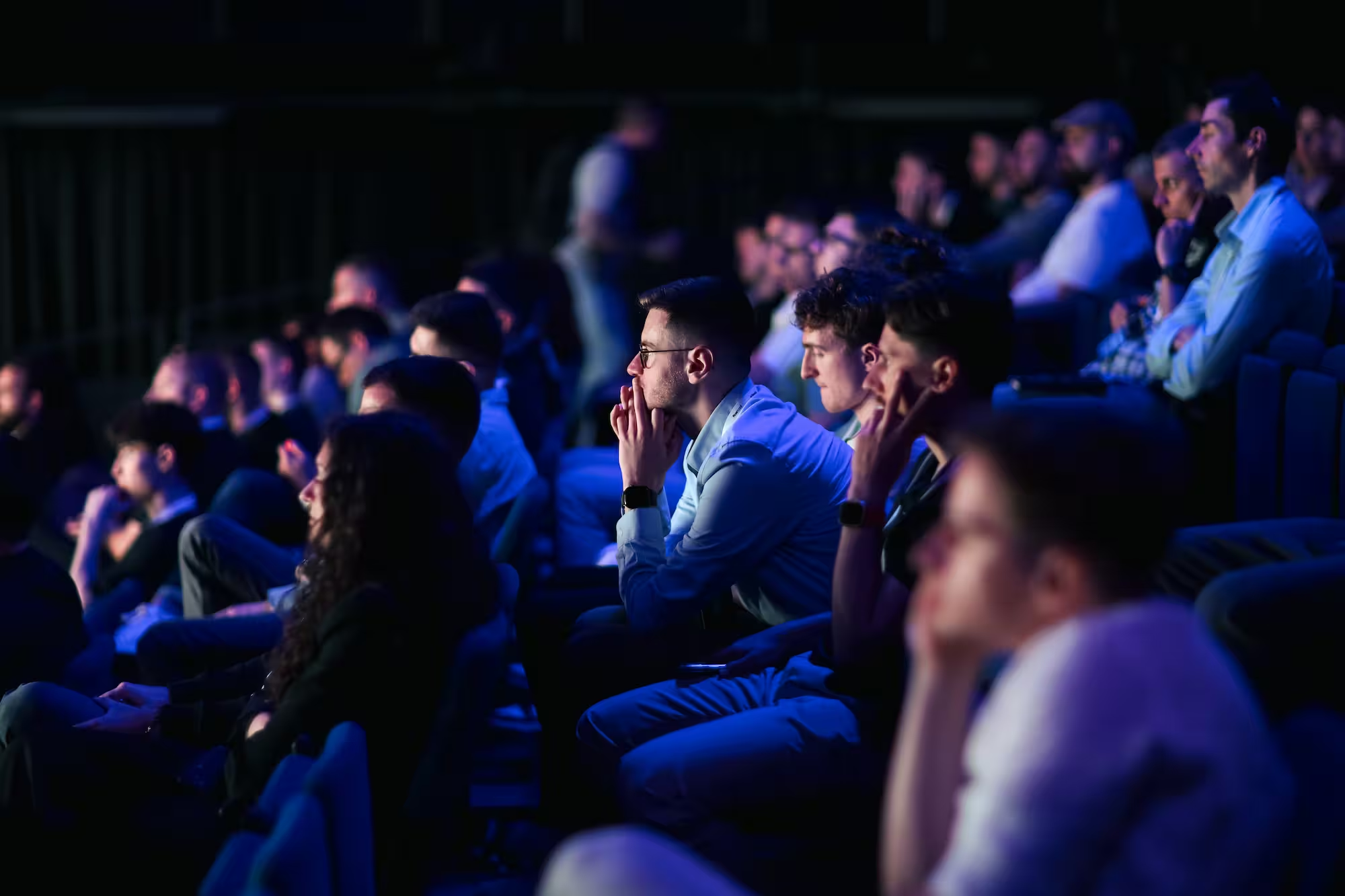
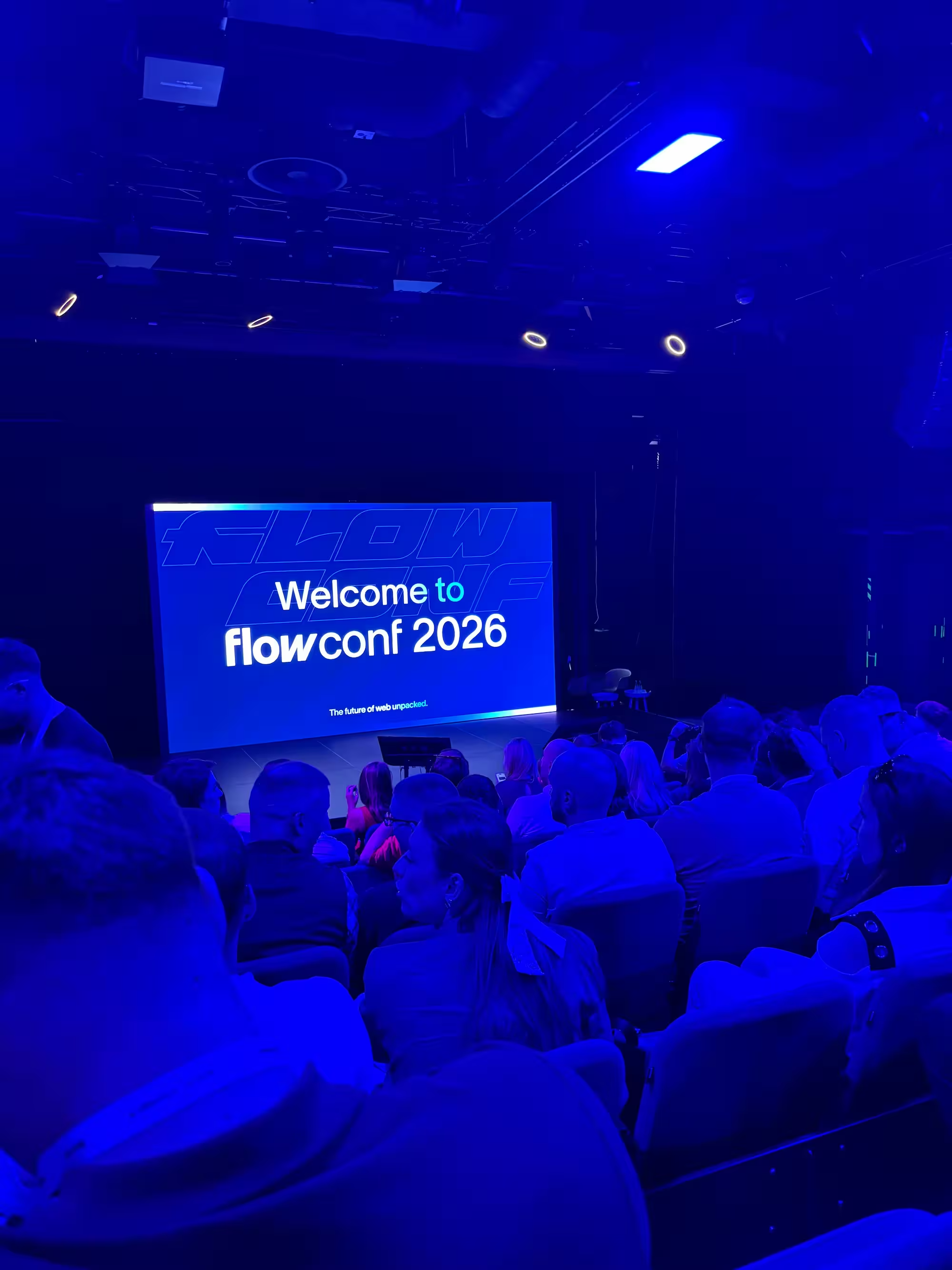
Belgrade hosted the new edition of flowConf, with two stages, more than 25 speakers and a program built around a single question: how do you win in the new web ecosystem?
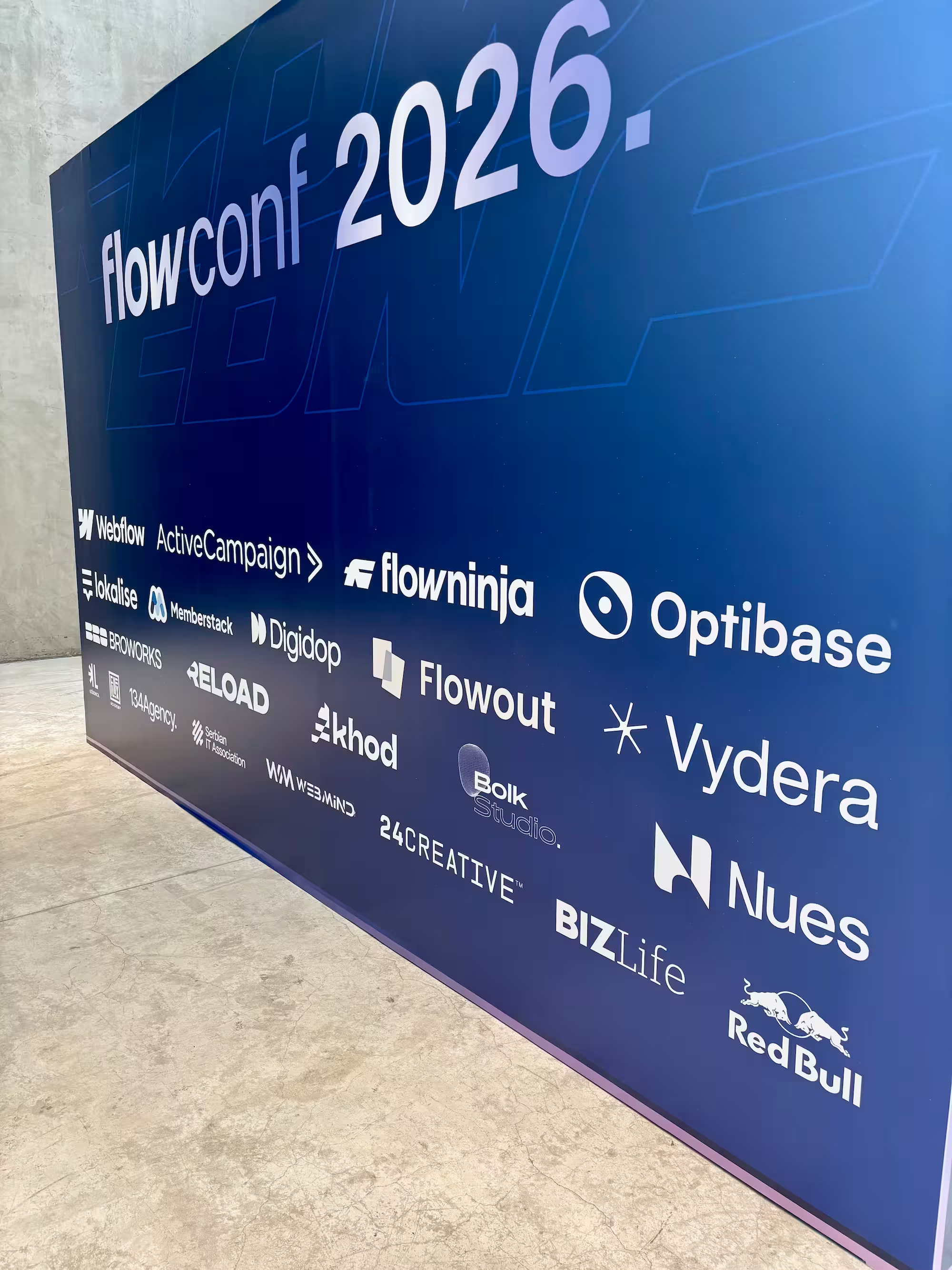
Vydera was a sponsor alongside Digidop. What stood out, both on stage and in conversations with other players in the room, is that the topic was no longer Webflow as a tool. The topic was the web itself, changing in nature.
Three talks framed the conversation around search:
- Guy Yalif (Webflow) on AEO
- Bhanu Chawla (Klipboard) on the new AI marketing stack
- Sïmon Saneback on what he calls the shift "from browsing to delegating".
AEO and GEO: the new visibility battle
For years, the visibility battle played out on Google rankings. That logic is shifting.
The official numbers speak for themselves. In 2026, nearly two thirds of Google searches end without a click to an external website. Inside AI engines, around 93% of search sessions end without any click at all, and AI Overviews cut clicks on the top-ranking page by 58%. Adobe measured a 693% year-over-year jump in AI-referral traffic to US retail sites during the 2025 holiday season.
The takeaway is straightforward: being cited in an AI answer is now worth as much, if not more, than ranking #1 on Google.
That's what makes AEO and GEO so central. The logic has shifted:
- Classic SEO aims to make a page rank
- AEO / GEO aims to get a brand cited inside answers generated by ChatGPT, Perplexity, Claude, Gemini or Google AI Overviews
It's no longer the same mechanics, signals or content formats. We break down the concrete differences in our article SEO vs GEO: what's really changing.

What Webflow signaled with its AEO toolkit
The Webflow ecosystem moved fast. The platform launched Webflow AEO, an end-to-end agentic solution that helps marketing teams measure AI visibility, get brand-aware recommendations and ship improvements directly inside Webflow.
Three key capabilities:
- AI analytics: track how often a brand is cited inside AI answer engines, which prompts trigger those citations and how AI visibility connects back to on-site engagement
- Agentic recommendations: prioritize technical fixes (broken links, outdated metadata) and content opportunities tied to the prompts you're tracking
- Closed-loop execution: ship approved changes live at scale, with a review-before-publish step built in
On stage, Guy Yalif delivered the same message from the Webflow side: visibility inside AI answers now matters as much as, if not more than, traditional rankings.
From the "destination" web to the "agent" web
The other strong signal was Sïmon Saneback's keynote. His thesis: the web is no longer a list of sites you visit, it's a set of systems that understand user intent, adapt in real time and act on the user's behalf.
In practice, that means websites no longer speak only to humans. They also speak to:
- Answer engines that read, parse and cite
- AI agents that compare, shortlist and take action for the user
A brand that's invisible to those systems eventually drops out of the buying decision. That's also why emerging standards like WebMCP start to matter: to go further, see our article WebMCP: making your site agent-ready.
What this concretely changes for brands
Vydera is an AI-native SEO & GEO visibility agency. This positioning wasn't built as a reaction to the AI hype: it comes from a call we made from day one, that organic visibility would play out on two parallel fronts.
On the SEO side, because Google still owns the volume. On the GEO / AEO side, because that's where the value is moving, and where traffic quality is highest. Several studies show AI-referral traffic converts 4 to 14 times better than classic SEO, with significantly longer time on site.
In practice, winning on both fronts requires working on:
- The semantic structure of the site (clean headings, direct answers, Schema.org markup)
- Provenance signals (brand identity, authors, dates, authority)
- The content format, so it's both rankable and citable
- Measurement of visibility inside AI engines, on top of classic Google tracking
- Technical accessibility for crawlers from ChatGPT, Perplexity, Claude and others
These are the building blocks we assemble for the brands we work with. flowConf 2026 simply confirmed in public what's been driving Vydera projects since day one.
Conclusion
flowConf 2026 marked a tipping point: AEO and GEO are no longer just topics to monitor, they're boardroom topics. The question is no longer whether AI visibility deserves a budget, but how much of the marketing budget should be reallocated to it now.
For Vydera, it's a confirmation. Visibility inside AI-generated answers is the field where the next few years will be won, and it's exactly the field this agency was built for.
What is AEO (Answer Engine Optimization)?
AEO means structuring a site so it can be understood, extracted and cited by AI answer engines like ChatGPT, Perplexity, Claude or Google AI Overviews. Where SEO targets ranking on a results page, AEO targets being cited directly inside a generated answer.
What's the difference between SEO, AEO and GEO?
SEO optimizes a page so it ranks in classic search engines. AEO optimizes content so it gets used as an answer by answer engines. GEO (Generative Engine Optimization) is a close cousin, focused on visibility inside content generated by generative AI. In practice, AEO and GEO overlap heavily.
Is SEO dead?
No. SEO is still essential because Google still owns most of the search volume, and because pages that rank well are also the ones most cited by AI engines. Pages ranking #1 on Google are about 3.5 times more likely to be cited by ChatGPT than pages outside the top 20. SEO and AEO / GEO reinforce each other.
Why does AI traffic convert better?
Because the user lands with an intent already shaped by their conversation with the AI. They've often compared, asked their questions and validated criteria upstream. They arrive on the site ready to decide, not to discover.
Where should a brand start if they've never worked on AEO / GEO?
Three short-term priorities: audit current visibility inside the main AI engines (which citations, on which prompts), restructure key pages with direct answers, FAQ sections and clean Schema.org markup, and set up dedicated measurement to track progress month over month.