Making the websites understandable by Google and generative AI to improve visibility among tourists

Making the websites understandable by Google and generative AI to improve visibility among tourists
Implement complete structured data across both sites in multiple languages to activate rich snippets and optimize presence in AI responses
Zoo de Guadeloupe and Zoo de Martinique are two major wildlife parks in the French Caribbean. With an international audience of French, English, and Spanish-speaking tourists, their online visibility is a key driver for attracting visitors.
The situation was straightforward: when a tourist searches "guadeloupe zoo hours" or asks ChatGPT "things to do in Guadeloupe with kids", the zoo needs to show up with accurate information. For that to happen, Google and AI models need to fully understand the website content.
That's exactly what structured data enables, and that's exactly what was missing.
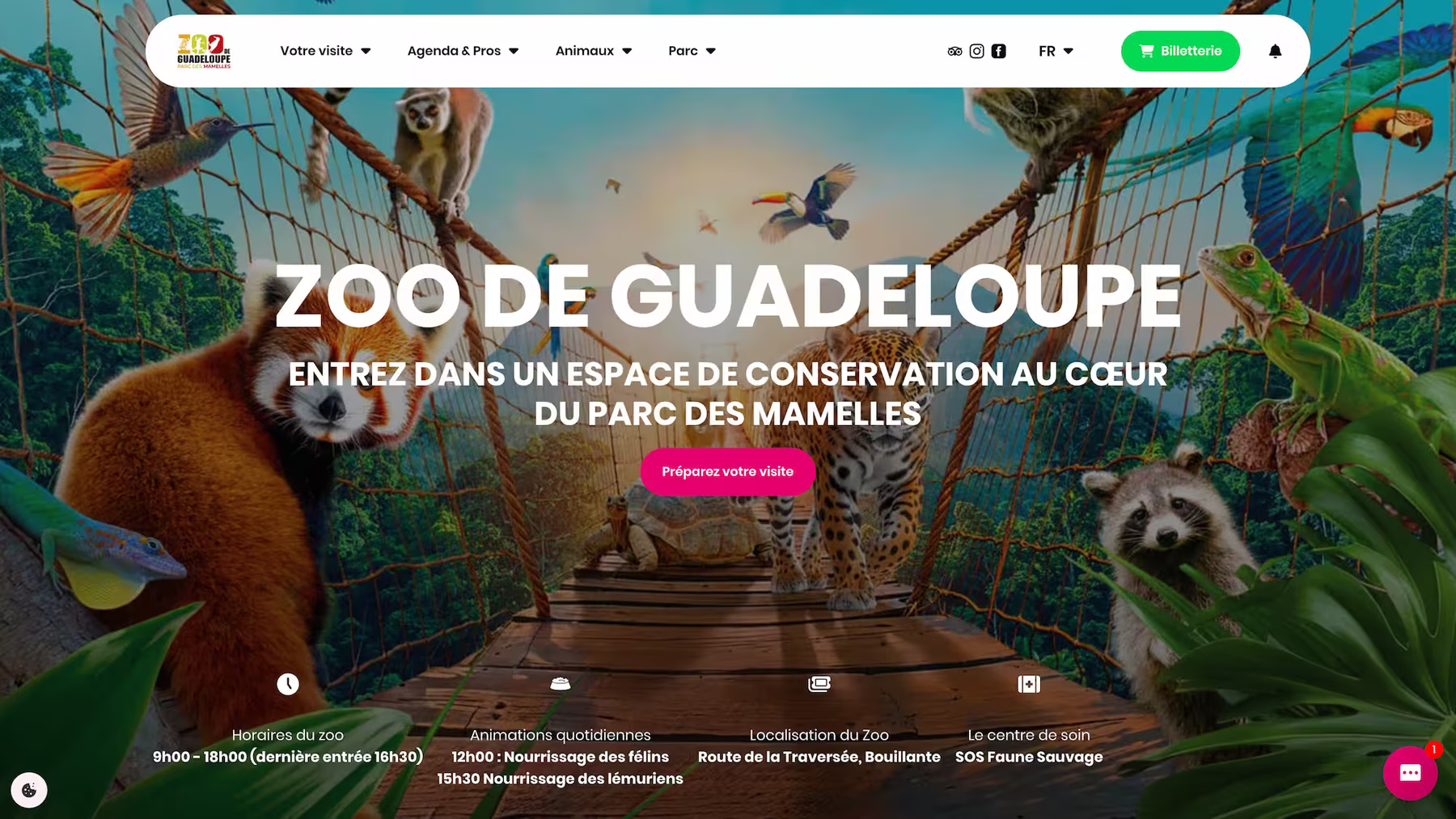
Our mission: implement complete structured data across both websites, in three languages, turnkey.
We made every page "readable" by Google and AI by adding markup that's invisible to visitors but essential for search engines. The result: key information (hours, pricing, reviews, events) can now appear directly in Google results and be cited by AI assistants.
To understand what structured data is and why it's become essential, read our dedicated article: Everything you need to know about structured data
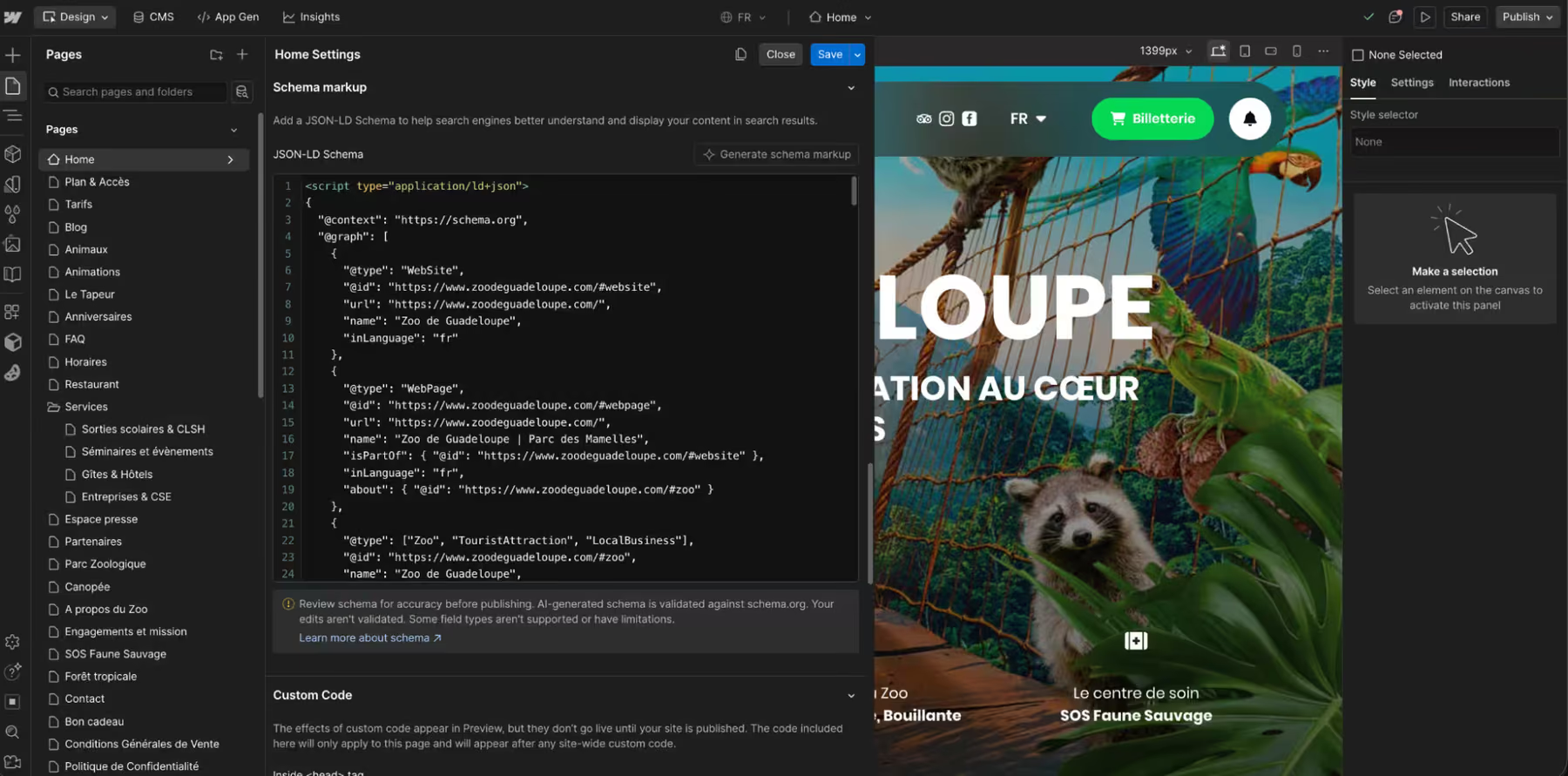
We covered all strategic pages across both websites:
Everything deployed in French, English, and Spanish to capture international tourist searches.
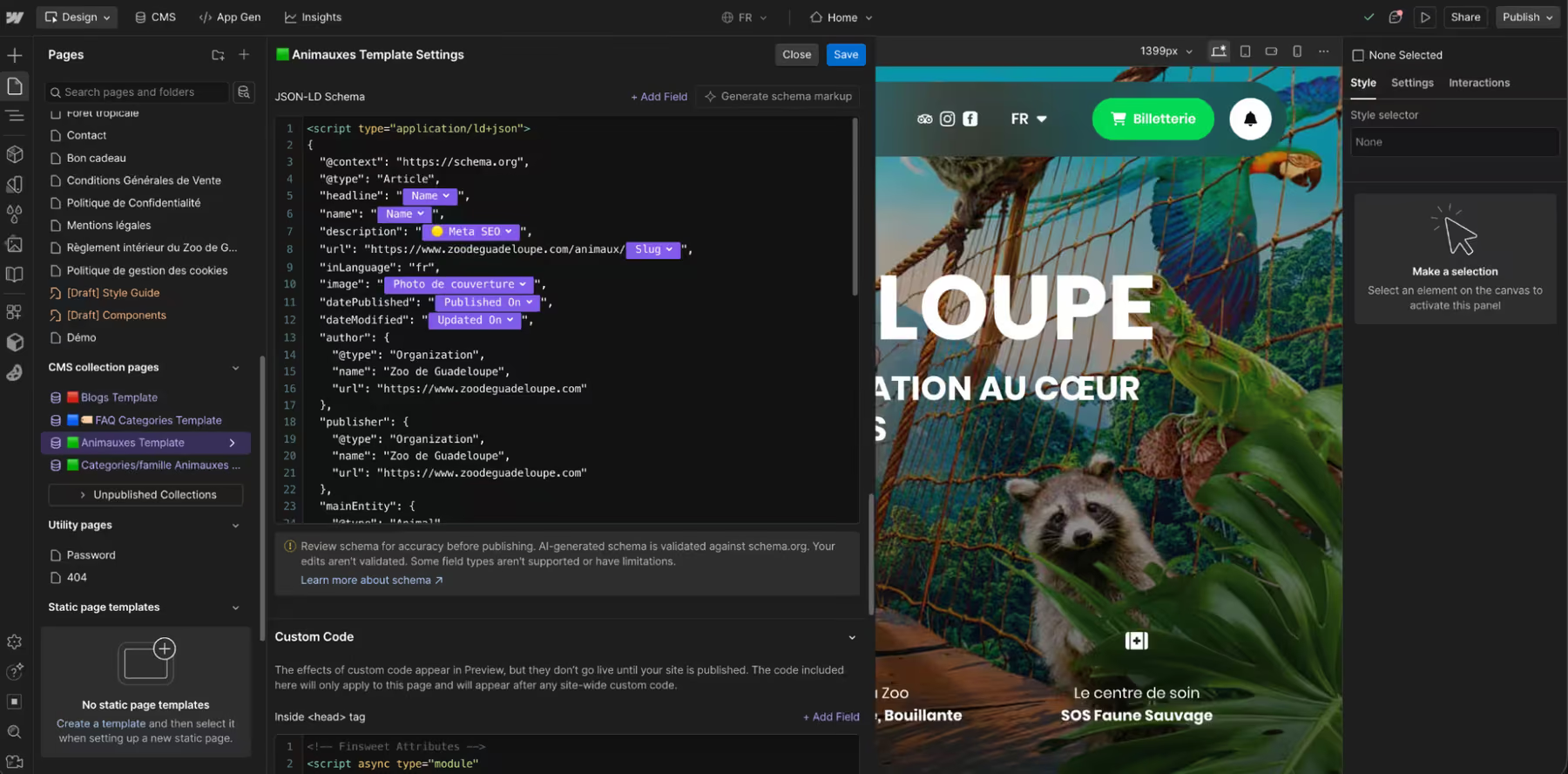
The intervention followed three steps:
1. Audit and scopingAnalysis of existing content to identify which information to structure first: organization, products, events, articles, FAQ.
2. Technical implementationGeneration and integration of JSON-LD schemas directly in Webflow. Each page received its adapted markup (LocalBusiness, Product, Event, Article, ItemList, BreadcrumbList).
3. Google validationTesting of each schema with official Google tools (Rich Results Test) to ensure compliance and eligibility for rich results.
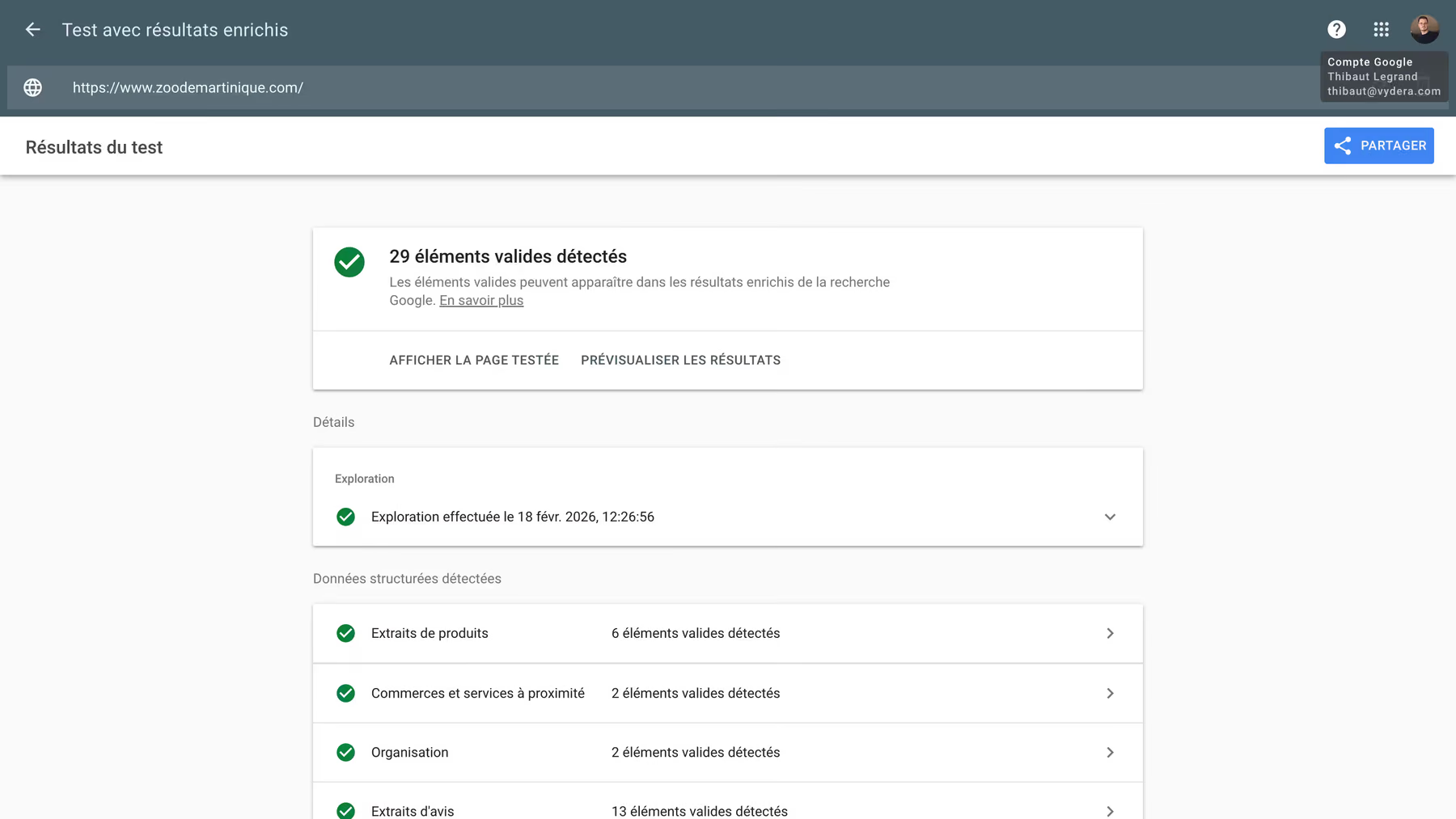
In Google search results:Pages can now display star ratings, hours, prices, and events directly in search results. No need to click for the information, which significantly increases click-through rates.
In AI responses:When someone asks ChatGPT, Perplexity, or Google SGE for activity recommendations in Guadeloupe, the zoo's information is now structured to be accurately extracted and cited.
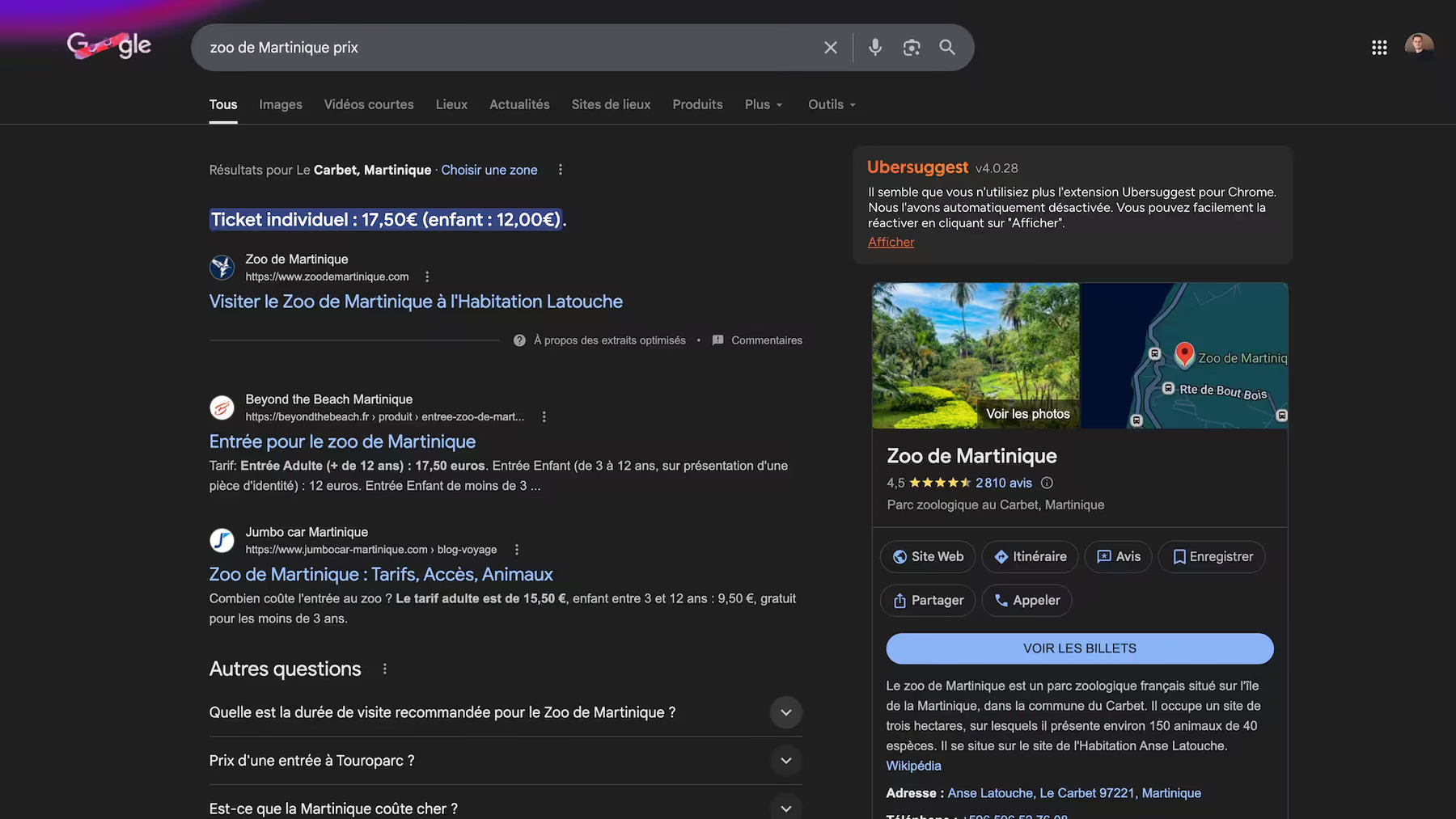
Structured data is no longer a technical detail. It's the foundation for visibility in modern search, whether on Google or in generative AI responses.
Our support covers the audit, implementation, and validation of Schema.org schemas so your teams can focus on their core business.
Would you like to implement structured data on your website? Let's talk about it.
Continue reading






Your leads are already searching.
The question is: will they find you?