.svg)

In February 2026, Athena Business School was spending €400,000 a year on ads to fill its campuses. By July, annualized ad spend was down to €60,000, and search was bringing in close to 300 leads a month, against about 100 from paid ads.
Work-study business school in France: 2,000+ students, 9 campuses, 1,500 partner companies. Working with Vydera since February 2026 on Google and AI search.
In February, you had to know Athena to find it
95% of the school's Google visits came from searches that already included the word "Athena". A high school student looking for a work-study sales diploma in Lyon, without knowing the school, found its competitors instead. In ChatGPT and Perplexity, Athena showed up in 3% of answers to study-choice questions, ranking 43rd among the schools cited.
Students who had never heard of Athena reached it through paid ads, at €400,000 a year. A month without ads would have meant a month with almost no new applicants.
Build first, cut ad spend second
Athena didn't slash its ad budget in February. The school first invested in the pages its future students were searching for, then lowered spend month by month as those pages started bringing in leads.
Over three months, 42 articles went live on the programs in highest demand, including France's two-year business diplomas (BTS MCO, NDRC, GPME) and the Bachelor. Every campus page was rewritten for local searches. And Athena got listed in the education directories that AI assistants rely on when a student asks which school to pick.
"Just one month in, we saw triple-digit growth in traffic and rankings on Google."
Thibaud Masson Chevaleraud, Marketing Director, Athena BS (translated from French)
Six months later
- Close to 300 leads a month from search in May and June 2026, against about 100 from paid ads.
- 5x the enrollment rate: a lead from search enrolls five times as often as a lead from an ad.
- €60,000 in annualized ad spend in July, down from €400,000 in February.
- 48.5% presence in AI answers, up from 3% in February. Athena is now among the top 3 schools cited.
It didn't all happen at once. In April, search was still bringing in only 205 leads. And admissions are seasonal, so part of the drop in ad spend would have happened anyway. We're not claiming €340,000 in savings. What we measured: by July, the school was spending a seventh of what it used to on ads, and its lead volume held.
Are most of your leads still coming from paid ads? Let's look at what search could take over for you.
How we worked
The February audit, the three phases of the project, and the numbers month by month.
What the audit found
Three problems, tackled at the same time.
- No non-branded page ranked. Google and AI assistants had nothing to show someone who didn't know the school yet.
- Athena wasn't listed in education directories, which AI assistants use to recommend schools.
- Campus pages ran to 300 words, against 2,000 for competitors, on the very searches where students choose a school.
Nothing unusual on that list. But as long as ads kept the campuses full, no metric flagged any of these three issues.
Six months, three phases
Phase one produces nothing visible: it sets up measurement. Without it, every decision after would have been guesswork.
- Full SEO, GEO, technical and editorial audit, then prioritization
- H1s, titles and metas fixed across the program and campus pages
- LLMS.txt file and structured data implemented
- GA4 and Looker Studio tracking set up
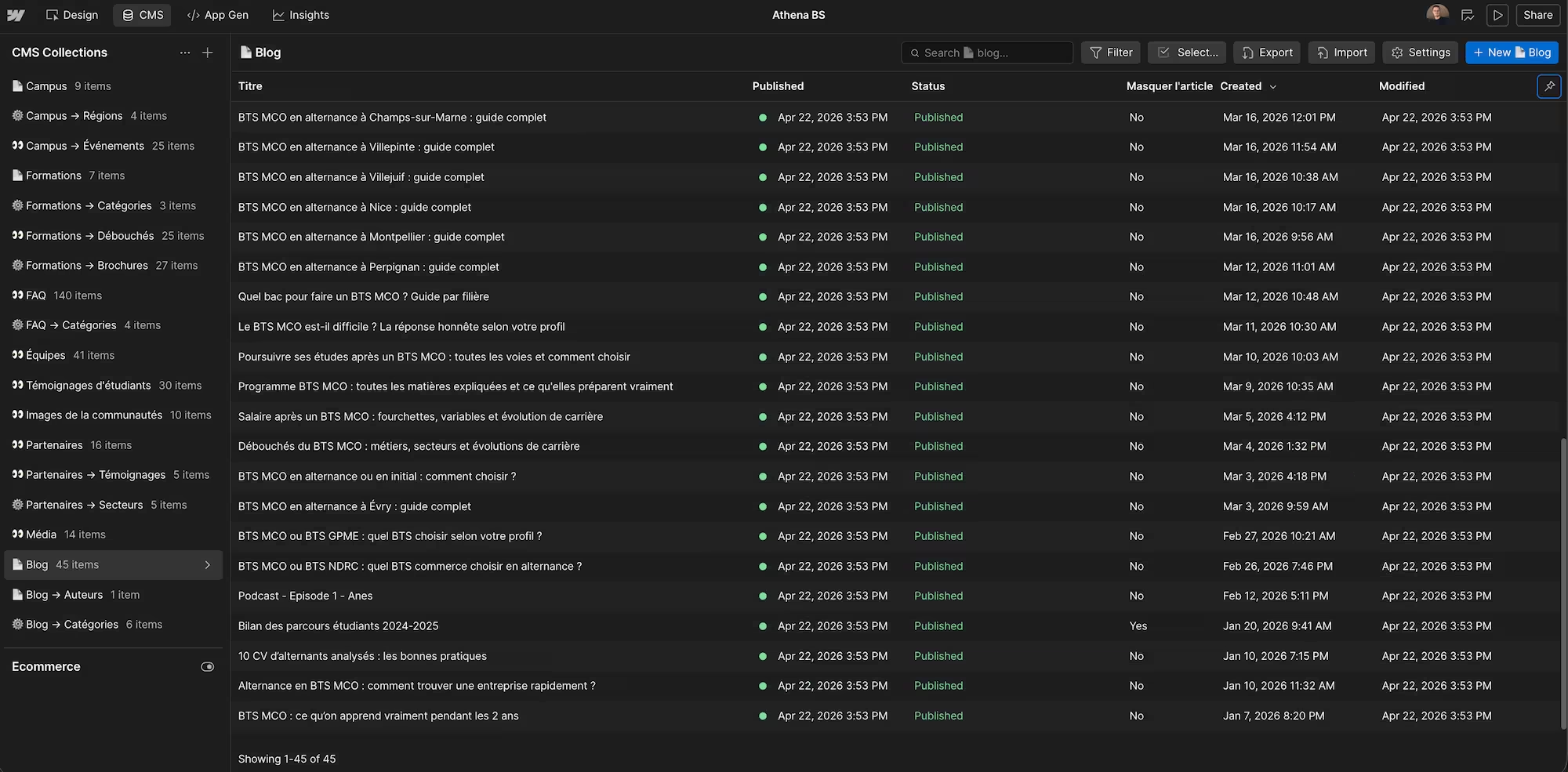
- Semi-automated workflow launched, AI agents calibrated on the Athena brief
- 42 pieces shipped across the BTS MCO, NDRC, GPME and Bachelor RDC clusters
- Programs hub page created
- FAQs enriched across the whole site
- Geo-targeted FAQs on the 9 campus pages
- Author page and Person schema for E-E-A-T signals
- Authority work on directories and external citations
- Month 2 content starts getting picked up by Google and the AI engines
From month two, every article answers a question a prospective student asks a few weeks before deciding. A piece on Bachelor work-study salaries doesn't draw huge traffic, but the people reading it are comparing schools.
Drafting runs through AI agents trained on Athena's brief. A Vydera consultant picks the topics and angles, the school approves each piece in a shared Notion database, and the article is then published in the Webflow CMS. That workflow sustained three to four articles a week: 42 in three months.


The numbers, month by month
On Google, clicks went from 1,627 in February to 6,156 in May 2026, nearly 4x. The site's average position moved from 12th to 6th. Most of the traffic lands on program and campus pages: Bachelor work-study salaries, the BTS MCO and GPME programs, the Marseille and Lyon campuses.
In AI search, Athena appears in 48.5% of tracked answers, up from 3% in February, and climbed from 43rd to the top 3 schools cited. AI assistants now send around 200 visits a month to the site, up from zero in February.
Leads from search:
- April: 205
- May: 297
- June: 279
Over the same period, paid ads brought in about 100 a month.
A lead from search enrolls five times as often as a lead from an ad. Our read: the first has usually read an article on career prospects before requesting a brochure, so they've already compared schools. The second often discovers Athena by clicking the ad.
What we took away
Ad spend came down once search could take over. Cutting the budget in February would have emptied the pipeline while the new pages were still ramping up. Athena reduced it month by month, tracking organic leads.
The same content worked for Google and for AI search. The 42 articles lifted the school on Google and in AI answers over the same period. The AI-specific work (structured data, Q&A formats, directory listings) was layered on top.
Want Google and AI search to become your #1 lead source? Talk to an expert
Can SEO replace a paid search budget?
Partly, and gradually. At Athena BS, search brought in close to 300 leads a month in May and June 2026, against about 100 from paid ads, while annual ad spend went from €400K to €60K in six months. The school cut its ads month by month as organic leads grew, rather than all at once.
How long before organic takes over from paid ads?
Expect two to three months before the first signals and around six months for a measurable shift. At Athena BS, content production started in month two, rankings began to climb in month three, and the pace of close to 300 leads a month settled in by month five.
Why does an organic lead convert better than a paid one?
Because they arrive further along in their decision. A prospective student who reads an article on career prospects before requesting a brochure has already compared several schools. Someone who clicks an ad often discovers the school at that moment. At Athena BS, a lead from search enrolls five times as often as a lead from an ad.
Should SEO and GEO be handled separately?
At Athena BS, we handled them together. The same content serves Google and AI search. GEO adds structured data, Q&A formats and a presence in the sources AI assistants consult. Over the same period, the school's AI visibility went from 3% to 48.5%.
How do you measure a brand's visibility in AI search?
With a panel of representative questions, asked every week to ChatGPT, Perplexity and Gemini through a tracking tool. We look at three numbers: the share of answers that mention the brand, the share that cite its website as a source, and the tone used. That tracking is what puts Athena BS in the top 3 schools cited, up from 43rd in February 2026.



.jpeg)
