
.svg)

.jpg)
Saas
2025
SEO
,
The context
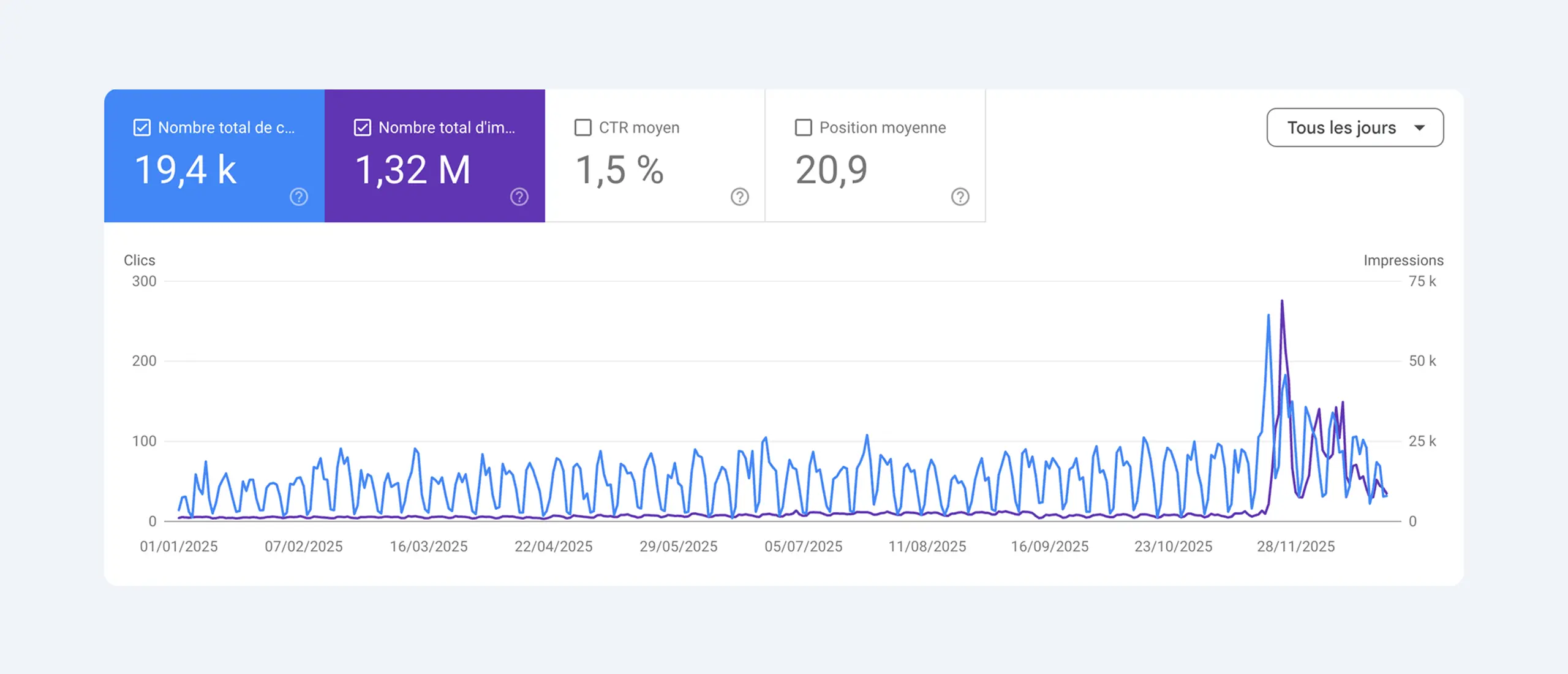
Guideflow is a B2B SaaS platform that enables teams to create interactive guides and automated demos. Following a website redesign in late November 2025, the team noticed something alarming: a massive traffic spike followed by a sharp decline.
Their first reaction: they thought they had broken something during the redesign.
Our diagnosis
After analyzing their Google Search Console data, we identified the real cause: there was no technical issue.
The impression spike around November 24th was caused by temporary overperformance on Ahrefs-related queries. Three pages had briefly captured a disproportionate volume of impressions through a featured snippet on a high-volume keyword.
Our conclusion: The "drop" wasn't actually a drop. It was simply a return to normal baseline after a one-time, non-reproducible event.
This analysis helped reassure the Guideflow team and refocus efforts on what truly mattered: building healthy, sustainable organic growth.
Our approach: the expert consultant role
Rather than taking over full execution, we adopted a strategic advisor role. The Guideflow team had the technical skills to implement changes — they needed an expert perspective to identify the right levers.
Our mission focused on two key areas.
Area 1: Tutorial pages optimization
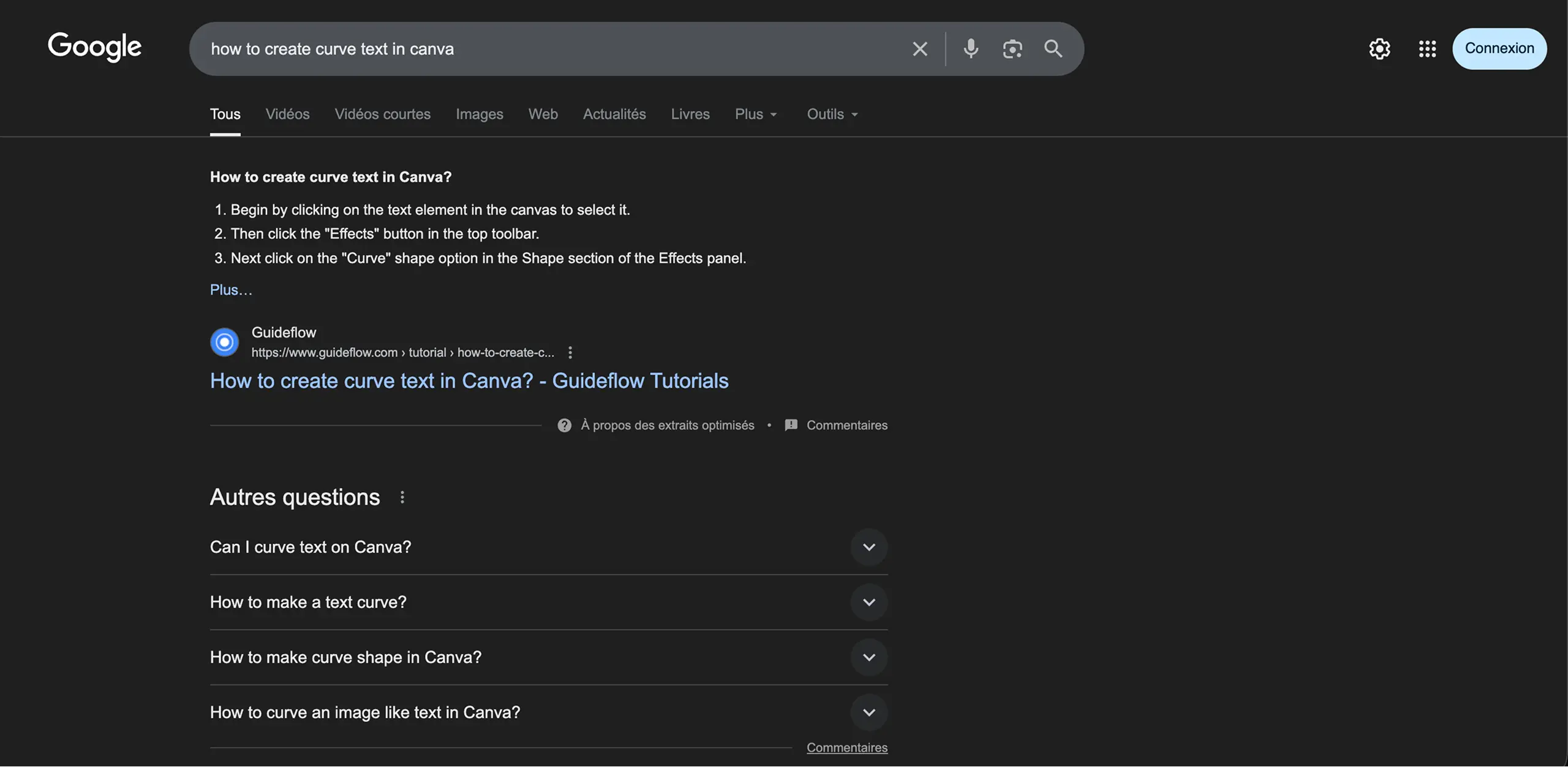
Guideflow uses programmatic SEO to generate hundreds of tutorial pages. Our goal: optimize them to appear as featured snippets against their competitors.
Key recommendations:
- Redesign the "other tutorials" block to display 3 cards from the same tool
- Create dynamic pages per tool listing all related tutorials
- Restructure content using ordered lists to improve Google extraction
- Optimize meta descriptions with action-oriented format
- Replace generic H2s with dynamic, differentiated fields
- Implement HowTo structured data
Area 2: Technical performance optimization
The website had several technical issues impacting user experience and crawlability.
Issues identified and resolved:
- Inconsistent URL canonicalization
- Missing alt text on images
- Duplicate Google Analytics code
- Fonts loaded from Google Fonts (migrated to local WOFF2)
- Unused CSS and JavaScript
- Incomplete structured data
- Thin content pages in sitemap
What we implemented directly
While our primary role was advisory, we handled certain critical technical optimizations:
- Structured data: Fixed and added schema on homepage and tutorial pages
- Video migration: Moved videos from Webflow to Bunny.net
- Code cleanup: Removed orphan CSS classes and unused scripts
- Accessibility: Added titles to iframes and aria-labels to icon links
- HTML semantics: Implemented article tags for blog and tutorial pages
The results
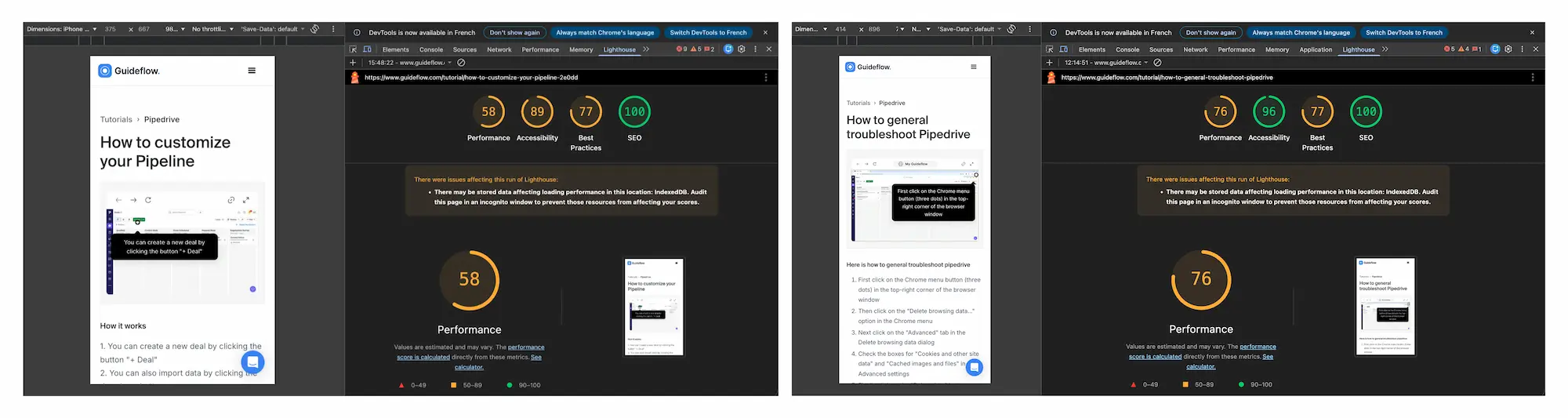
Technical performance - Mobile Homepage
- Before
- Performance : 43
- Accessibility : 89
- Best Practices : 77
- SEO : 92
- After
- Performance : 63
- Accessibility : 96
- Best Practices : 77
- SEO : 92
Organic visibility
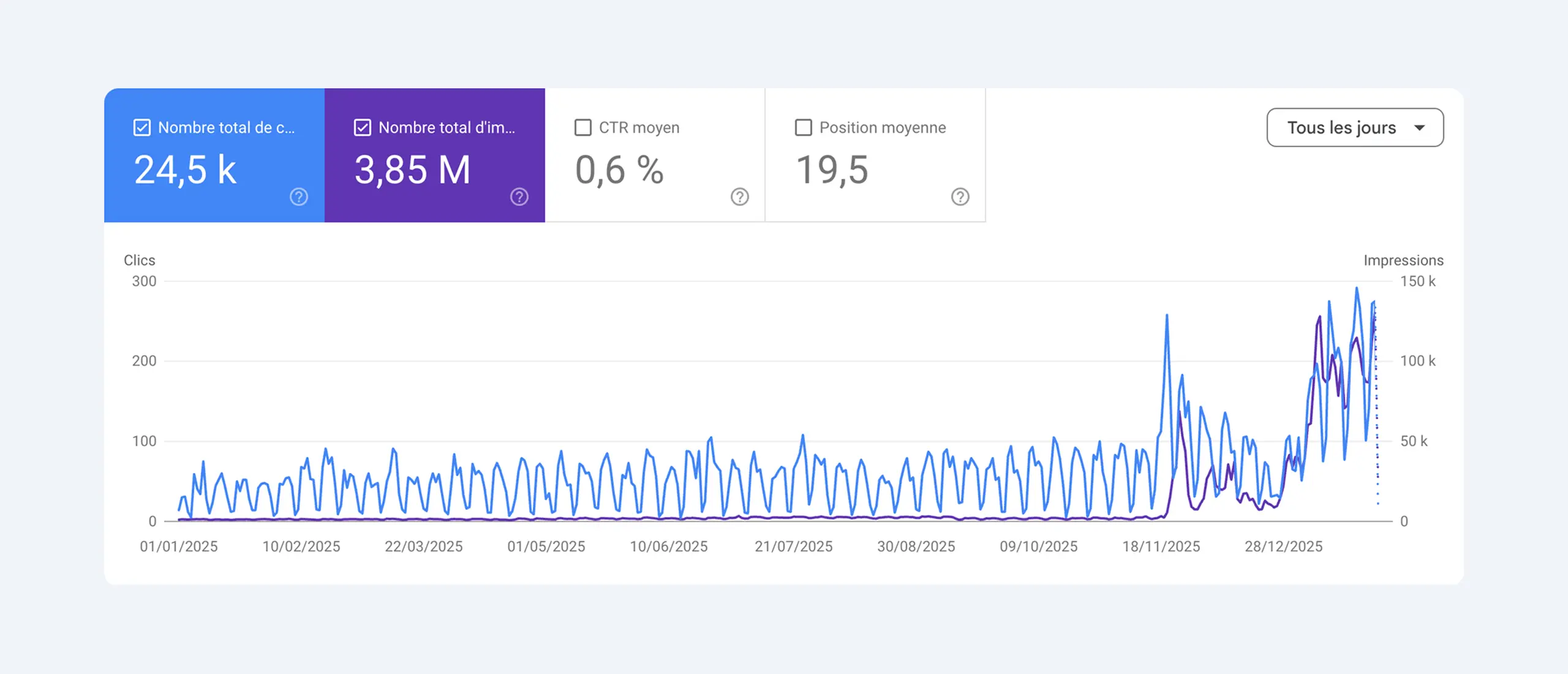
We started in early December. Results observed in late January show healthy, consistent growth:
- FAQ rich results: 0 → 5 valid items
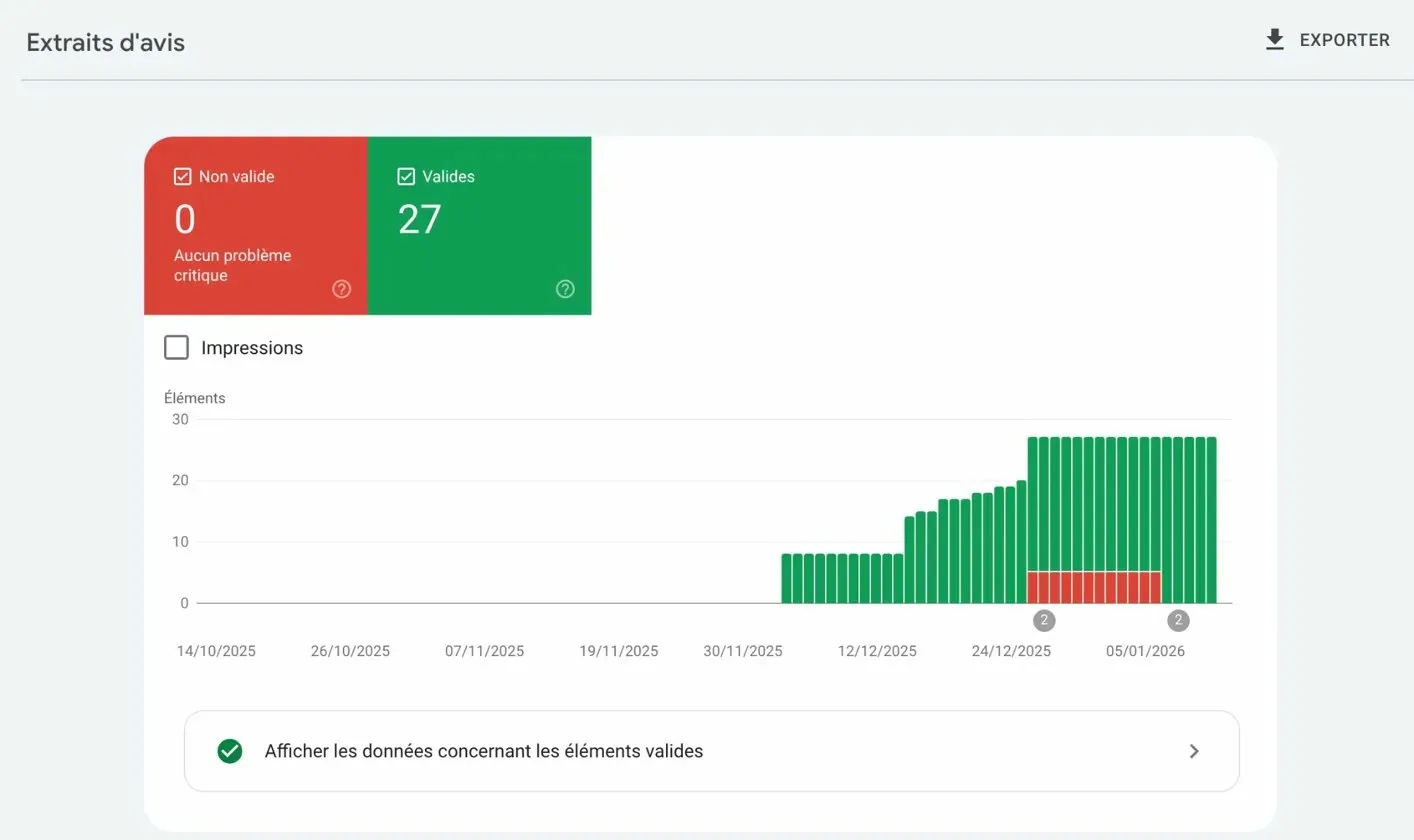
- Review snippets: 0 → 27 valid items
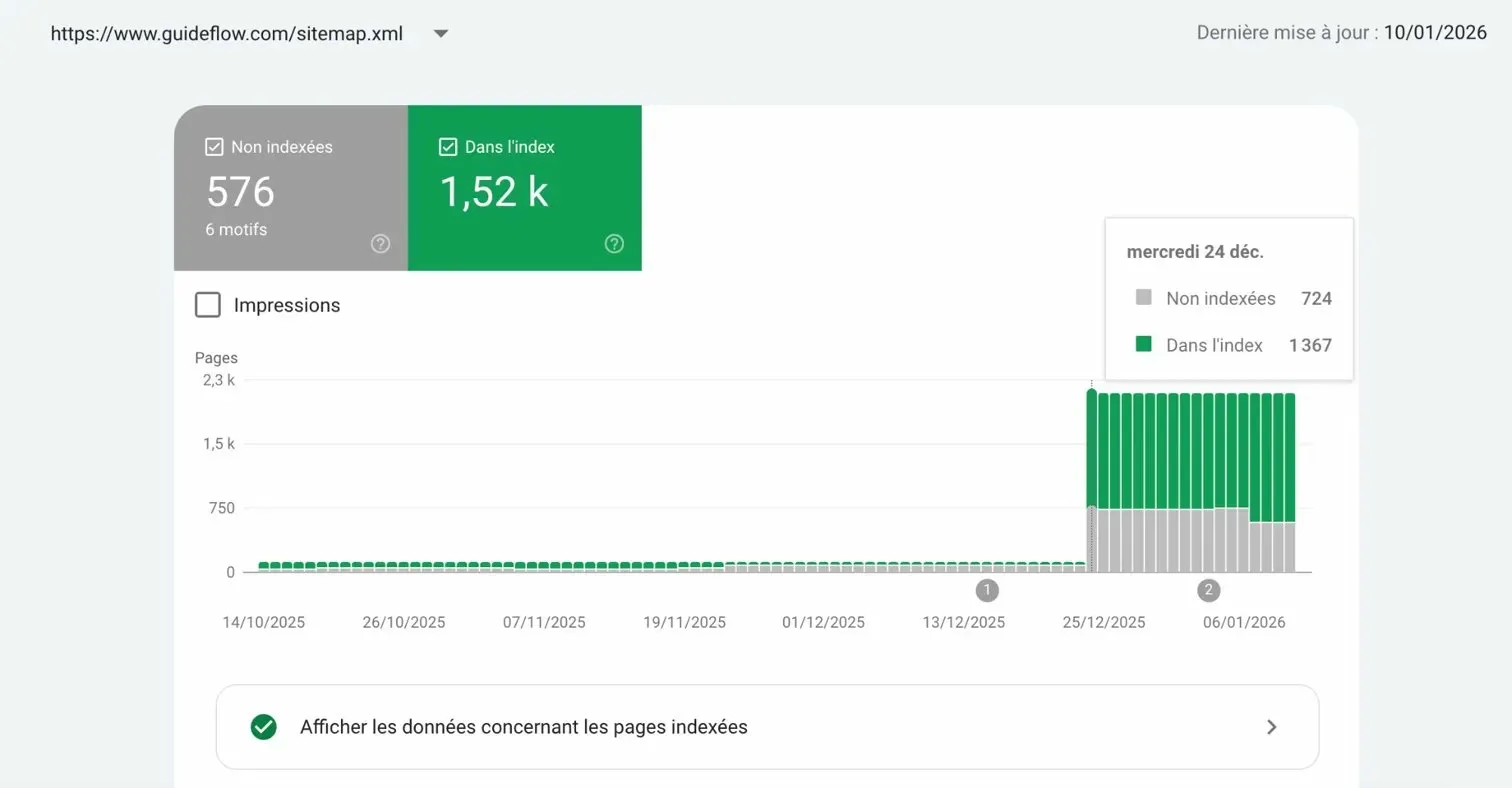
- Indexed pages: Grew to 1,367 pages in the index
- Overall trend: Impressions and clicks steadily rising, now exceeding the November spike level — but this time sustainably
Key takeaways
- A traffic spike isn't always good news — and its "drop" isn't always a problem
- Programmatic SEO requires careful attention to structured data and content differentiation
- Technical optimization remains an underrated SEO lever
- A good consultant identifies what NOT to do as much as what to do

.jpg)

.jpg)